
Keep Student-Athletes Safe at Your School
Athletic injuries are common and can have long-term repercussions. Some injuries result from physical contact while playing a sport; others are due to factors such as weather, dehydration, playing while injured, and not following safety recommendations.
Due to the large number of athletes and injuries, there is a growing need to ensure students play safely.
Common Athletic Injuries
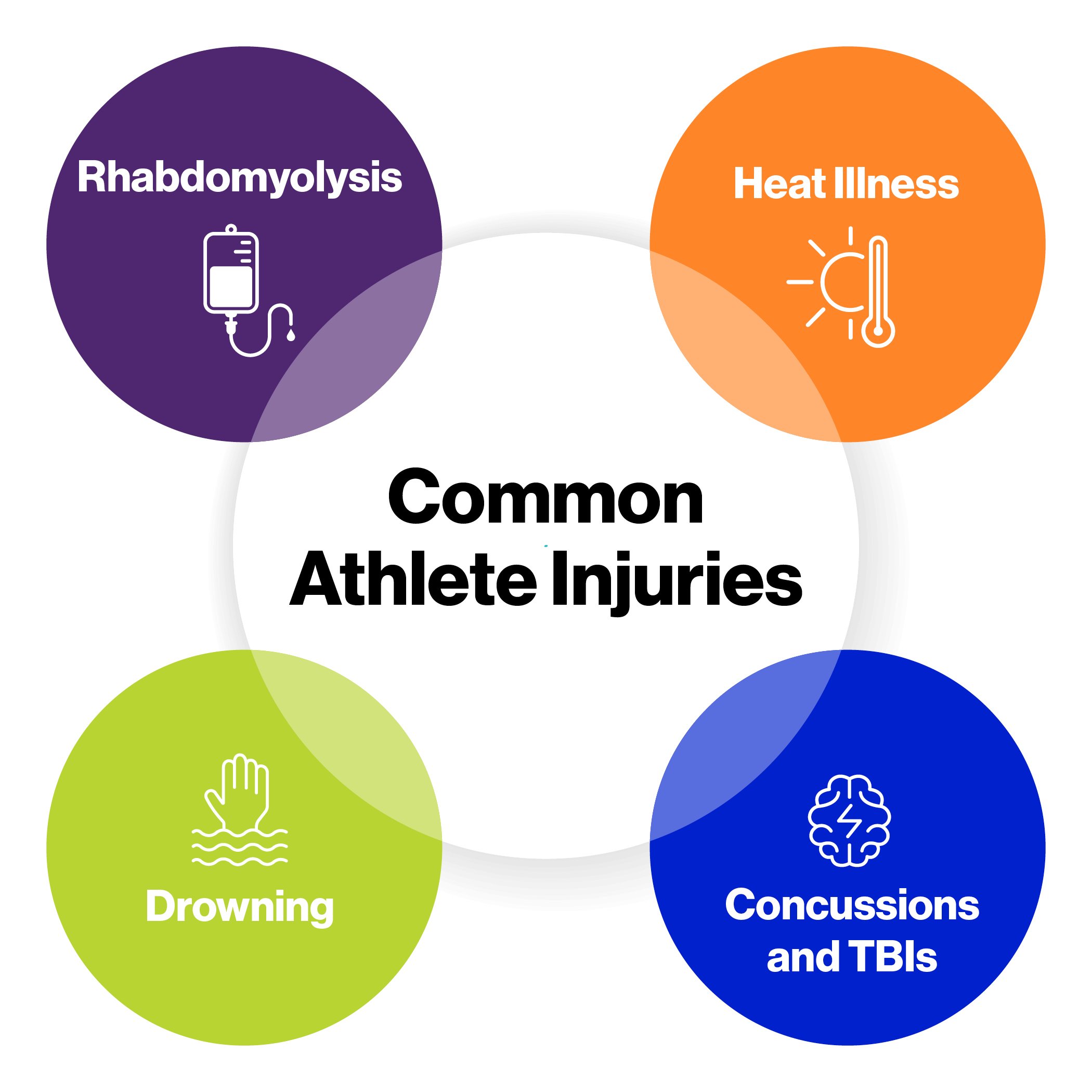
Rhabdomyolysis
Rhabdomyolysis is a potentially life-threatening medical condition that particularly strenuous workouts can cause. This condition causes rapid muscle damage that can result in permanent disability or death. Several extreme workouts by K-12 and college athletics teams resulted in large-scale rhabdomyolysis hospitalizations.
Heat Illness
Heat-related illness is preventable, yet it is a leading cause of death and injury among college and high school athletes, especially those in high-exertion sports such as football.
Concussions and TBIs
Concussion diagnoses have increased in the last decade. Traumatic brain injuries, including concussions, create the potential for catastrophic injury. The NCAA requires higher education institutions to have a concussion management plan on file, and all 50 states have established concussion management standards for youth sports.
Drowning
Drowning deaths occur every day and have increased in recent years. While most lifeguards and pool administrators know drowning is a common hazard, many do not realize drowning kills not only weak swimmers but also good swimmers in pools staffed by lifeguards.
Manage the Risk of Athletic Injuries
Take the following actions to protect athletes:
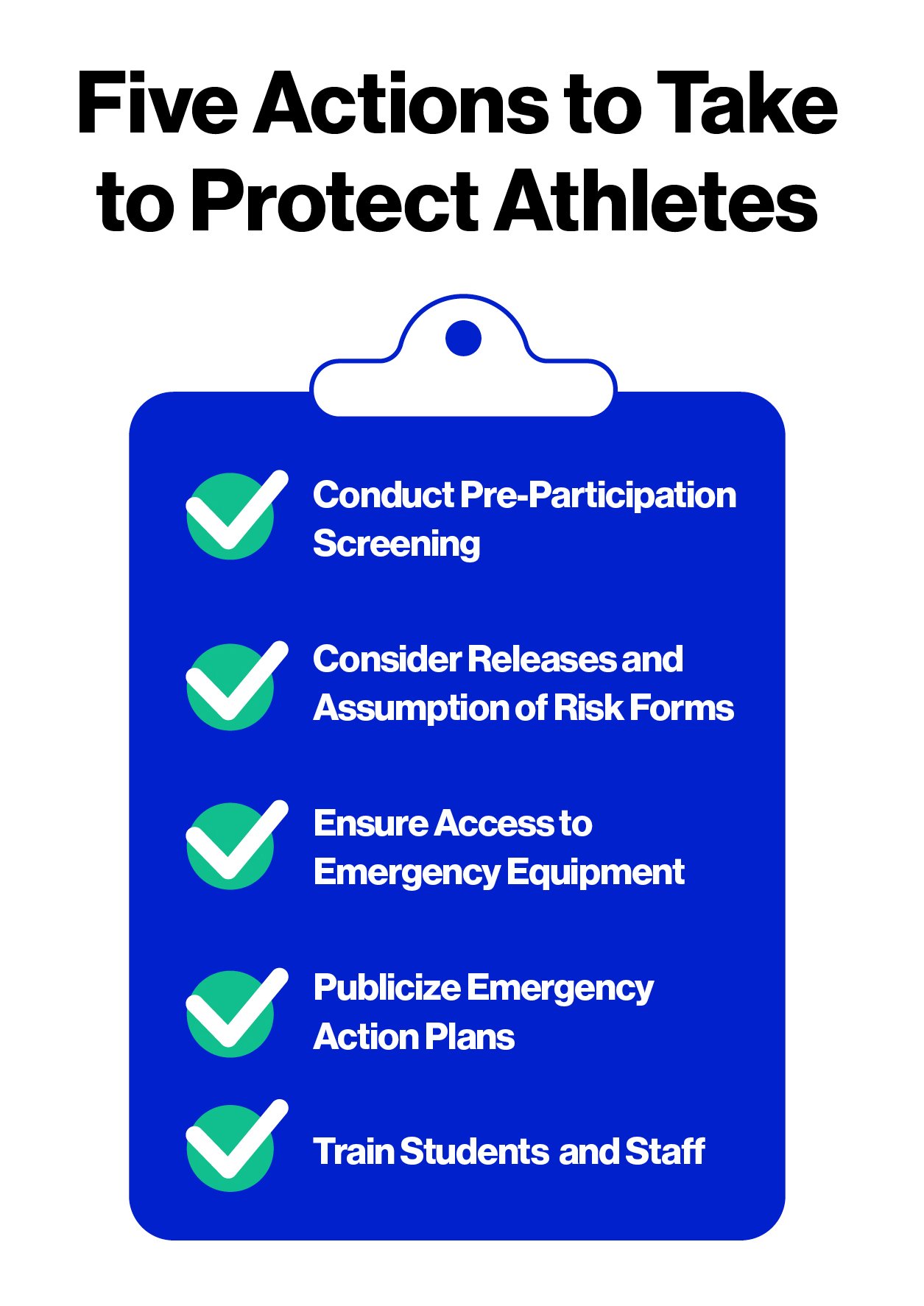
Conduct Pre-Participation Screening for Athletes
Preparticipation exams (PPEs) are effective means of establishing a basic standard of health for interscholastic athletes. The NCAA and most high school athletic associations require PPEs. State-licensed health care providers usually conduct PPEs. PPEs establish a baseline for play.
Consider Releases and Assumption of Risk Forms
Using a well-written assumption of risk form or release can highlight potential dangers of athletic participation, particularly in contact sports, and help deter lawsuits. A local attorney is best positioned to advise on state laws covering releases and assumption of risk forms.
Ensure Access to Emergency Equipment
Making the appropriate equipment available and training athletic staff in its proper use can save athletes’ lives.
For heat illness prevention, institutions are best positioned to respond to an emergency by ensuring this equipment is accessible at all practices and games:
- Heat stress monitor
- Thermometer
- Cold water immersion tub
Automated external defibrillators (AEDs) can increase the survival rate of people suffering cardiac arrest. Train athletics staff on their location and use.
Publicize Emergency Action Plans
An emergency action plan (EAP) is your institution’s road map for responding to an athletic emergency. EAPs provide a step-by-step instruction guide for acting during an emergency at or during a sporting event. Create a written EAP for any venue where students or employees exercise. Develop plans that identify the people, process, and equipment specific to the location. Compile all the venue-specific EAPs into a single, easily accessible document.
Train Students and Staff
In addition to training athletics staff on the location and use of emergency equipment, provide training to students and staff on injury prevention and response, highlighting these common causes of athletic injuries. Types of training may include online learning courses (HE and K-12). Tabletop exercises (for higher ed) also can help staff practice crisis management before an incident occurs.
More From UE
About the Author
-

Melanie Bennett, Esq., ARM-E
Senior Risk Management Counsel
In her role on UE’s Risk Research team, Melanie dives into timely topics affecting education. Her areas of expertise include protecting minors, enterprise risk management (ERM), technology accessibility, and athletics. Prior to joining UE, she interned at the U.S. Department of Education’s Office for Civil Rights. Melanie serves on the Higher Education Protection Network’s (HEPNet’s) Board of Directors.