
Manage Housing Risks When Acting as a Landlord
Your college or university may become a landlord in more ways than you realize. Beyond traditional residence halls, your institution may own rental homes for faculty or staff, lease apartments for students, provide short-term housing for visiting scholars, sublease space to affiliated organizations, or participate in public-private housing arrangements.
While these housing arrangements can support recruitment, retention, student success, and revenue goals, they also can create risks that differ from ordinary campus operations.
When your institution controls residential property, tenants may expect you to act like a professional landlord. That expectation can create legal exposure if lease terms are unclear, repairs are delayed, or security measures fail. Use these practices to reduce risk before a housing problem becomes a claim.
Use Strong Lease Agreements
An inadequate lease can turn a manageable dispute into a costly problem. Avoid informal arrangements, outdated templates, or department-created agreements that counsel has not reviewed. Each written lease should clearly identify:
- All parties and property
- The lease term
- Rent or other payment obligations
- Permitted uses and occupancy limits
- Renewal and termination rights
For student or employee housing, confirm the lease language aligns with institutional policies and does not promise services your institution cannot reliably provide.
Keep all housing-related leases, licenses, memoranda of understanding, and property management agreements in a central repository. Central review can help prevent inconsistent terms and give risk management, legal, facilities, student affairs, and public safety leaders a complete view of your institution’s housing footprint. Add any newly acquired properties to your off-campus real estate inventory.
Clarify Maintenance Duties and Follow Through
Maintenance failures can create significant landlord risk. Water intrusion; mold; pests; broken locks; malfunctioning alarms; inadequate lighting; icy walkways; loose railings; and heating, ventilation, and air conditioning (HVAC) failures can quickly become health, safety, or habitability concerns. Problems often worsen when responsibility for responding is unclear.
Assign responsibility for receiving, triaging, documenting, and closing maintenance requests. Set response expectations for emergencies, urgent repairs, and routine work. Track repeat complaints and unresolved work orders, especially those involving doors, locks, alarms, lighting, leaks, and slip-and-fall hazards.
Environmental Protection Agency guidance identifies moisture control as an important part of controlling mold and provides mold guidance for homes, schools, multifamily buildings, and commercial buildings.
Do not rely only on tenant complaints. Conduct periodic inspections, document findings, and confirm corrective action. For properties that third parties manage, require regular reports, proof of completed repairs, and prompt notice of serious incidents or code violations.
Treat Safety and Security as Shared Responsibilities
Housing risk extends beyond building conditions. Evaluate access control, exterior lighting, emergency communications, fire protection, visitor policies, and coordination with campus safety or local law enforcement.
Unsecured exterior doors can contribute to claims involving intruders entering residence halls or students accessing dangerous areas such as rooftops or engineering rooms. Consider measures such as:
- Controlled entry and exit systems
- Routine locking of exterior doors
- Self-closing doors
- Intruder detection systems
- Alarm monitoring and testing
- Housing policies
- Reviews of maintenance and security reports
For leased or off-campus properties, determine who is responsible for security patrols, cameras, access credentials, emergency repairs, and communication with tenants. Do not create a false sense of security. If you install cameras or access systems, identify who monitors them, how you retain footage, and how you report and correct malfunctions.
Manage Compliance Before Problems Arise
Landlord activities may trigger federal, state, and local requirements. Consult counsel about landlord-tenant laws, building and fire codes, fair housing requirements, accessibility obligations, privacy rules, and local rental registration or inspection programs.
Fair housing and disability accommodation issues require particular attention. Department of Justice guidance states that the Americans with Disabilities Act (ADA) applies to certain housing, including housing at public and private universities. The guidance also notes that the Fair Housing Act may impose different requirements for service dogs or other animals that assist people with disabilities. Train staff not to make ad hoc decisions about assistance animals, disability-related modifications, or accommodation requests.
Owned, leased, or controlled housing also may affect campus safety reporting. The Department of Education’s Clery Act framework requires covered colleges and universities to maintain and disclose campus crime statistics and security information. Determine whether your housing creates obligations related to Clery geography, annual security reports, fire safety reporting, emergency notifications, or timely warnings.
Older residential properties may create additional environmental obligations. For pre-1978 housing, lead-based paint disclosure and renovation rules may apply. Also evaluate asbestos, radon, carbon monoxide, local rental licensing, and state-specific habitability requirements.
Control Third-Party and Affiliated Housing Risk
Many housing programs involve property managers, developers, contractors, fraternities and sororities, foundations, alumni groups, or affiliated nonprofits. These arrangements can create confusion about who makes decisions, pays for repairs, and responds to incidents.
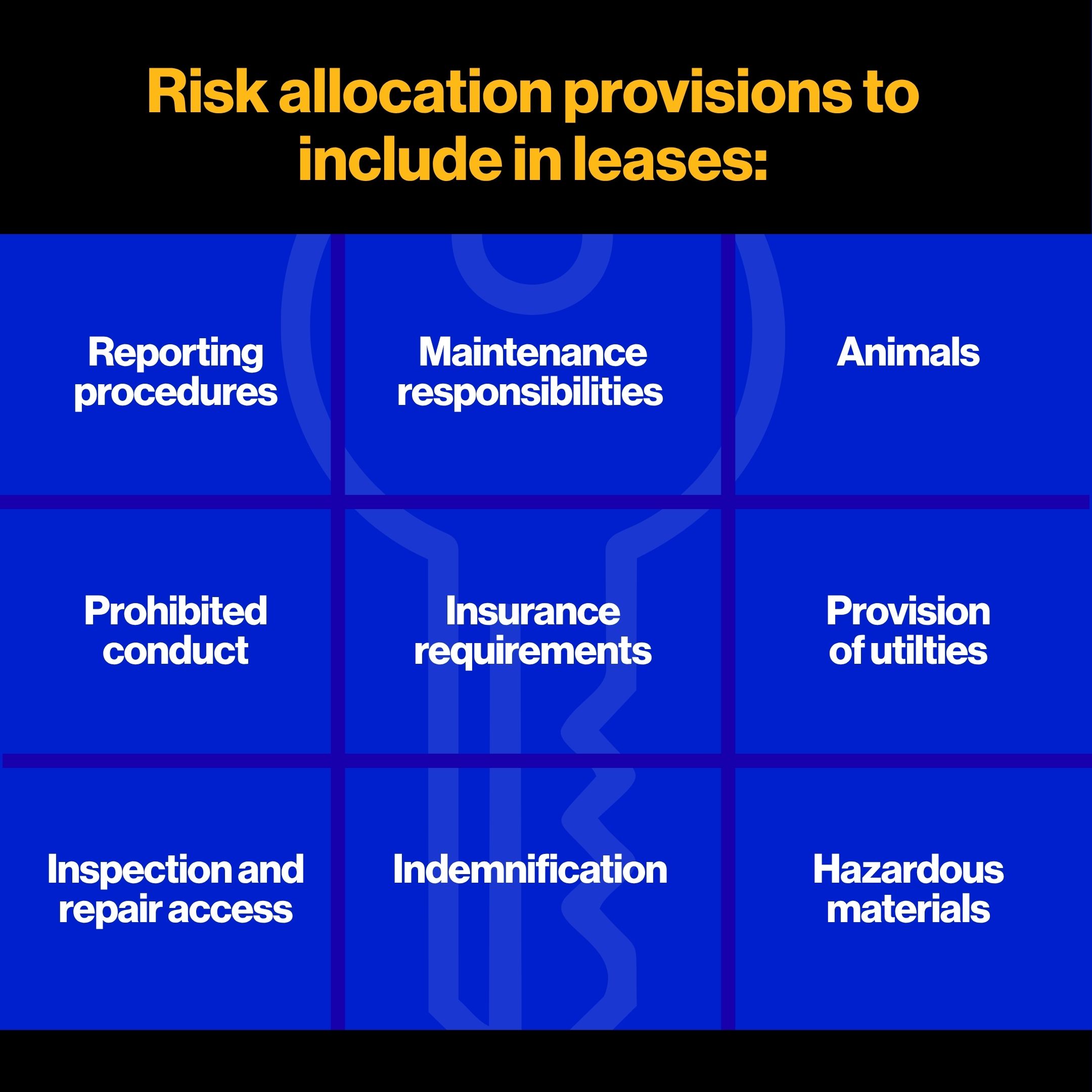
Use written agreements vetted by legal counsel that define roles, insurance requirements, indemnity, reporting, inspection rights, security expectations, code compliance, data privacy, and termination rights. Require vendors and property managers to carry appropriate insurance and provide certificates of insurance before work begins. Periodically audit performance rather than assuming the parties are following the contract.
Build a Landlord Risk Management Program
Create a simple but disciplined oversight structure for your housing program:
- Inventory all institution-owned, leased, subleased, or controlled housing.
- Assign an accountable office for each property.
- Use counsel-reviewed templates.
- Centralize contracts.
- Establish maintenance response standards.
- Conduct routine inspections.
- Track incidents, work orders, complaints, code issues, and security concerns.
- Report trends to senior leaders.
Landlord risk grows when housing is treated as a side activity. Instead, treat housing as an enterprise risk that requires coordination among legal, risk management, facilities, residential life, public safety, finance, and compliance.
More From UE
Take Inventory of Your Off-Campus Real Estate
Checklist: A Guide for Reviewing Contracts
This material is presented for general informational and risk management purposes only. It should not be considered legal, coverage, or other professional advice. Readers should consult their legal counsel, broker, or other appropriate adviser regarding their specific circumstances.
Copyright in this material is owned by United Educators (UE), a Reciprocal Risk Retention Group, unless otherwise stated. Permission to post, reproduce, distribute, share, or use this material beyond its intended audience must be obtained from UE. All rights are reserved.
About the Author
-

Lindsey Dunn
Senior Risk Management Counsel
Lindsey joined UE's Risk Management department in September 2024. Prior to that, she spent about six years as a Resolutions Counsel in the South Region for the Specialty Group. Before UE, Lindsey practiced labor and employment law. She is admitted to practice law in Florida and before the U.S. District Courts in Florida and the U.S. Court of Appeals for the Eleventh Circuit.